More Than Another Fire Season
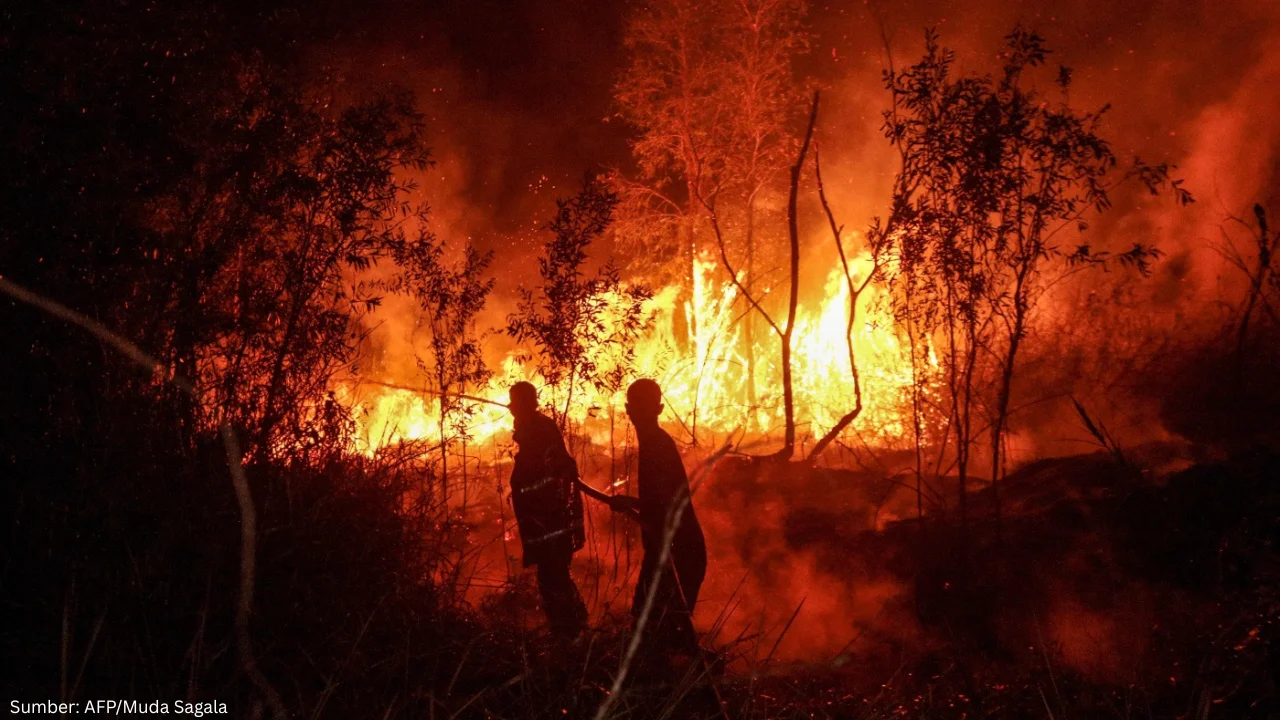
Forest and land fires returned to Indonesia in 2026, with haze affecting neighbouring Malaysia and Singapore. Reuters reported that cumulative burned land reached approximately 1.92 million hectares by the end of September, according to Nusantara Atlas satellite data—exceeding the figure recorded during the same period in 2019.
When Haze Becomes a Regional Crisis
The consequences extend beyond forest destruction. Air pollution threatens public health, disrupts daily activities, and creates diplomatic tensions with neighbouring countries. Although ASEAN has a framework for addressing transboundary haze, its effectiveness depends on prevention and meaningful action on the ground.
When Disaster Prevention Budgets Come Under Scrutiny
The crisis has unfolded as Indonesia's disaster preparedness capacity faces renewed scrutiny. In 2026, the budget of the National Disaster Mitigation Agency (BNPB) was cut from approximately Rp2.01 trillion to Rp491 billion, amid government austerity measures intended to fund other priorities.
The budget reduction does not, by itself, prove that the fires worsened because of insufficient funding. The government has stated that additional funds for wildfire response are available when needed and formally requested. Nevertheless, the situation raises an important question: is funding for prevention, preparedness, and emergency response sufficient as disaster risks continue to grow?
A Crisis That Should Not Be Normalised
Dry weather and El Niño can intensify fire risks, but land governance, peatland protection, monitoring, and law enforcement also influence the outcome. Managing wildfires requires more than extinguishing flames after they have spread.
When smoke crosses national borders, its consequences become a regional concern. Indonesia and its ASEAN neighbours must ensure that disaster prevention is not overshadowed by other government spending priorities.
Update history
Accountability
Attention shifted toward evaluating the government's response, disaster management funding, law enforcement, and regional cooperation to prevent another crisis.
Status: In progressThe Regional Crisis
Burned areas surged, haze spread across national borders, and the effects on public health and daily activities attracted wider regional attention.
Status: UnresolvedThe Escalation
Fires continued as dry conditions increased the risk of further burning. Questions surrounding land management, disaster preparedness, and government response became increasingly relevant.
Status: UnresolvedThe Beginning
Forest and land fires were reported across several Indonesian provinces, establishing that the crisis began months before regional haze became a major international concern.
Status: UnresolvedIssue started
The problem began. The counter runs from this day.
Sources & resources
Reporting, records and posts this page is built on. Links open on the original site.
 (News) (opens in a new tab)
MarketScreener· News
Indonesia's burned land doubles in September as fires rage, data shows
The size of land burned in Indonesia in September was double the area from a month earlier, according to a deforestation monitor, as the country battles fierce wildfires that have caused air...
marketscreener.com
 (News) (opens in a new tab)
Conservation news· News
Indonesia’s wildfire season surges as haze spreads into Malaysia
JAKARTA — Haze from fires in Indonesian Borneo has drifted across the border into the Malaysian portion of the island, pushing air pollution there to “very unhealthy levels” and causing school closures. On Aug. 12, Sarawak’s Tebedu district, near the Indonesia-Malaysia border, recorded an air pollution index (API) exceeding 200, considered “very unhealthy,” prompting the […]
news.mongabay.com
 (News) (opens in a new tab)
The Jakarta Post· News
Budget cuts cast shadow over disaster readiness - Society - The Jakarta Post
The National Disaster Mitigation Agency (BNPB) saw its budget for 2026 slashed to Rp 491 billion (US$29.1 million) from Rp 2 trillion in 2025, while the National Search and Rescue Agency (Basarnas) only got Rp 1.4 trillion for this year.
thejakartapost.com
 (Link) (opens in a new tab)
Antara News· Link
Purbaya pastikan siap tambah dana untuk kebutuhan atasi karhutla
Menteri Keuangan Purbaya Yudhi Sadewa memastikan telah menyiapkan anggaran yang diperuntukkan sebagai tambahan kebutuhan penanggulangan bencana kebakaran ...
antaranews.com
- (News) (opens in a new tab)
ASMC· News
ASMC Alerts - ASMC
Alert Levels In addition to its given mandate to serve as the designated regional centre for weather, climate, and haze monitoring, assessments, and outlooks, the ASMC provides early warning on the occurrence of transboundary haze in the ASEAN region. The early warning is issued in the form of an advisory according to a three-tier system […]
asmc.asean.org
Discussion
0 comments
No comments yet.